A metal display rack should respond to the way a category is bought, handled, replenished, and compared. A fixture that performs well for packaged snacks may be unsuitable for power tools; a compact accessory spinner cannot solve the sizing and presentation needs of apparel. Retailers get better results when they begin with industry-specific behavior rather than selecting a familiar rack and forcing products into it.
This approach also improves custom manufacturing. When the supplier understands stock weight, pack geometry, customer dwell time, replenishment frequency, hygiene requirements, and store traffic, it can engineer a display that supports daily operations as well as visual merchandising. The following solutions connect common retail industries with practical metal rack configurations.
Start With the Category’s Selling Conditions
Before choosing shelves, hooks, or baskets, map the conditions surrounding the sale. Identify how shoppers approach the category, whether they need to touch or compare products, how often staff refill stock, and what can go wrong during use. Product data remains essential, but retail behavior explains how that data should shape the fixture.
• Record the heaviest unit and the maximum stock load on each level.
• Observe whether shoppers browse from one side, several sides, or across an aisle.
• Measure cartons and consumer packs instead of relying on nominal product sizes.
• Note cleaning, food-contact separation, security, mobility, and price-label needs.
Food and Beverage Displays Need Fast Replenishment
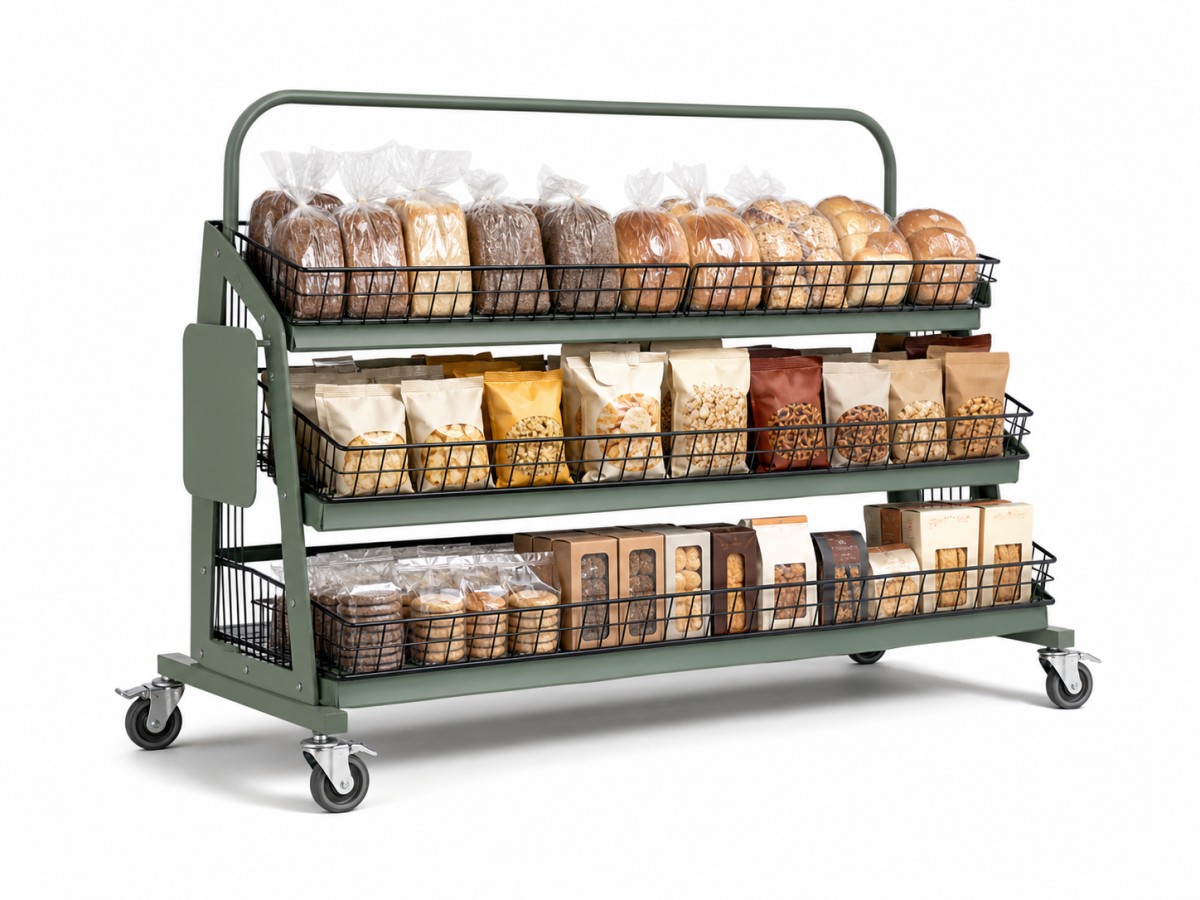
Packaged food displays must keep labels visible while allowing staff to refill quickly. Wire baskets suit flexible bags and irregular packs; tiered shelves create clear facings for cans, bottles, and boxed goods. Front lips should retain products without hiding branding, while open sides help staff see low stock.
Design for stock rotation
Where expiry dates matter, the rack should support first-in, first-out routines. Shelf access, carton opening space, removable baskets, and caster options can reduce handling. Snack baskets and mobile bread-display formats demonstrate how the structure can follow both package behavior and replenishment practice.
Beauty and Personal Care Require Visual Precision
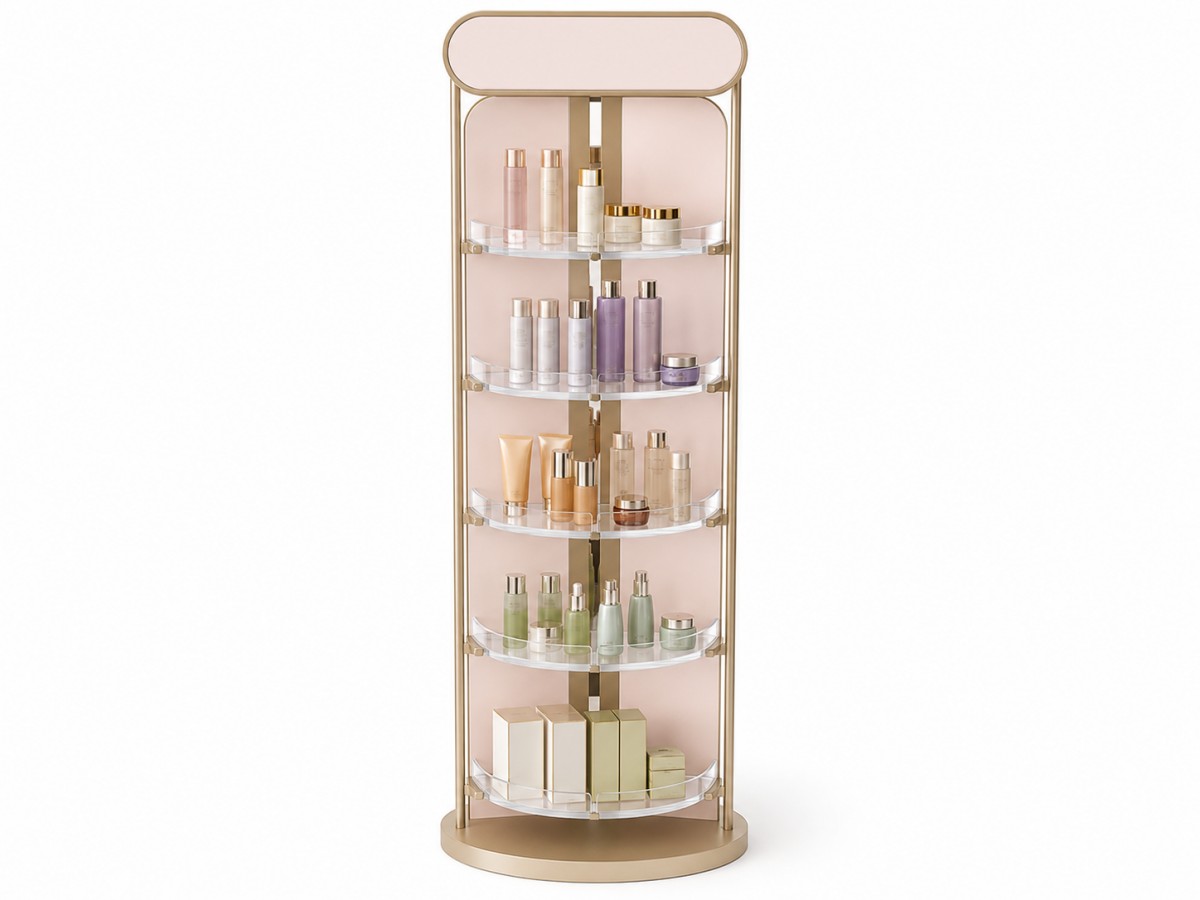
Cosmetics and personal-care packs are often small, visually similar, and sold through shade or formula comparison. Shallow shelves, dividers, tester zones, aligned ticket strips, and controlled lighting help customers understand the range. A metal frame can provide rigidity while acrylic trays or printed panels organize finer details.
Prevent visual noise
More capacity is not always better. When every surface carries products or graphics, premium items lose emphasis. Establish a clear hierarchy: brand message first, category or benefit second, and individual SKU information at the point of selection.
Hardware and Automotive Racks Must Carry Real Loads
Tools, fluids, components, and automotive accessories place greater demands on shelves and hooks. The specification should include individual weights, total shelf load, likely impact during handling, and whether customers will pull products forward. Pegboard panels work for packaged parts, while reinforced shelving supports cases and containers.
Make compatibility easy to understand
Hardware shoppers frequently buy by size, model, or application. Label zones, grouped hooks, sample mounting points, and product-family graphics reduce search time. The fixture should remain readable even after several items have been removed.
Consumer Electronics Need Access and Security
Electronics displays must balance product interaction with loss prevention and cable management. Metal structures can conceal wiring, support lockable storage, and create stable mounting points. Ventilation and service access are important when powered devices or illuminated graphics are included.
Avoid designing security as a late addition. Locks, tether points, cable routes, and staff access affect shelf spacing and customer reach. A prototype should be tested with the actual devices, chargers, packaging, and security hardware.
Apparel and Accessories Benefit From Flexible Presentation
Apparel fixtures must accommodate different garment lengths, folded stock, hanging products, and seasonal range changes. Adjustable rails and shelves provide flexibility, while rotating stands use a compact footprint for hats, socks, scarves, or packaged accessories.
Protect the browsing experience
Crowded rails make garments hard to remove and replace. Allow finger space, hanger movement, and a clear view of size markers. For accessory displays, test the unit with uneven loading so rotation and stability remain reliable during real shopping.
Pet Retail Combines Bulky Stock With Small Accessories
Pet stores sell heavy food bags alongside lightweight toys, treats, grooming items, and leads. One fixture rarely handles all formats efficiently. Reinforced lower shelves can carry bulk products, while baskets and hooks organize smaller items at comfortable browsing height.
Category stories can improve cross-selling: feeding accessories beside food, grooming tools beside care products, or travel items in one solution zone. The structure should make these relationships obvious without mixing price labels or blocking package information.
Home Improvement Stores Need Modular Capacity
Home-improvement ranges change by project, season, and local demand. Modular uprights, replaceable shelves, pegboard zones, and removable sign holders let stores revise assortments without replacing the frame. Durable powder coating also supports frequent handling and routine cleaning.
Plan around project missions
A project-led display groups products customers need together rather than arranging them only by supplier. The fixture can combine demonstration space, boxed stock, hanging accessories, and a short installation message while maintaining safe load distribution.
Convenience Stores Must Earn Every Centimeter
Convenience stores depend on rapid decisions and limited floor area. Narrow basket racks, counter displays, and mobile promotional units can add capacity without interrupting traffic. Product visibility from the aisle entrance and checkout queue often matters more than maximum stock depth.
Check door swings, queue lines, refrigerator access, and staff sightlines before finalizing the footprint. A display that creates congestion can reduce sales elsewhere even when its own products perform well.
Specialty and Gift Retailers Need Storytelling
In specialty retail, the display often explains craftsmanship, provenance, compatibility, or gifting. Slim metal frames can create a refined background while timber, acrylic, or printed elements add warmth and detail. Adjustable components remain useful, but visible hardware should not distract from the products.
Use negative space deliberately
Empty space can signal value and make hero products easier to notice. Capacity should be based on the desired presentation and replenishment plan, not simply the maximum number of items that fit.
Turn Industry Requirements Into a Manufacturer Brief
A useful request for quotation should separate universal requirements from industry-specific ones. Universal information includes dimensions, loads, quantity, destination, branding, and assembly. Industry-specific information covers food rotation, tester access, security, compatibility labeling, garment browsing, or heavy-product handling.
| Retail industry | Critical display condition | Useful metal configuration |
| Food and beverage | Rotation and rapid refill | Tiered shelves or open baskets |
| Beauty | Small-SKU comparison | Shallow divided shelves |
| Hardware | Weight and compatibility | Reinforced shelves plus pegboard |
| Electronics | Security and cable control | Lockable, serviceable frame |
| Apparel | Browsing and seasonal change | Adjustable rails or rotating stand |
Experience across food and beverage, health and beauty, automotive, apparel, electronics, pet products, home goods, hardware, and appliances is valuable only when it is translated into questions and design decisions for the buyer’s exact channel.
A category-specific prototype should also be reviewed by store employees, not only the design team. Staff can reveal whether cartons fit behind the fixture, whether labels remain readable during refill, and whether removable components are likely to be misplaced. These operational observations turn industry knowledge into measurable approval criteria.
Conclusion
Industry fit is the difference between a rack that merely holds stock and one that improves retail execution. Food displays prioritize rotation; beauty fixtures clarify small choices; hardware racks manage load and compatibility; electronics require security and cable planning; apparel needs flexible browsing; and convenience stores demand compact efficiency. Defining those realities first leads to a safer, clearer, and more productive custom metal display.
Frequently Asked Questions
These practical answers help buyers narrow an industry-specific display specification.
Can one metal rack design be adapted for several retail industries?
A core frame may be adaptable, but shelves, hooks, baskets, graphics, loads, and access requirements should be validated for each category. Reusing an untested layout can create operational problems.
What product information should be sent to the manufacturer?
Send pack dimensions, weight, photographs, desired capacity, merchandising order, store footprint, and any security, hygiene, mobility, or assembly requirements.
Are mixed-material displays suitable for industry-specific projects?
Yes. Metal can provide the structure while wood, acrylic, printed board, or lighting supports the desired appearance and function. Connections and shipping protection must be engineered together.
How should a retailer test an industry-specific prototype?
Load it with real products, ask store staff to replenish it, observe customer reach, check stability and labeling, and assemble it using the proposed instructions.
Post time: Aug-20-2026