A wooden fixture should do more than make a gift shop or bookstore feel warm. It must help shoppers understand an assortment that changes by season, theme, price, and product size. The design challenge is different in each store: gifts are often discovered through emotion and occasion, while books are found through subject, recommendation, and browsing.
Effective display planning therefore starts with the selling moment, not a preferred stand shape. The ideas below connect store zones, customer behaviour, merchandise capacity, and daily staff work so that a visually appealing display remains useful after launch.
Map the Store Before Choosing a Fixture
Mark the entrance sightline, main walking route, pause points, queue, and quiet browsing areas. Then record which product groups require explanation, handling, comparison, or fast replenishment. This map prevents a dramatic fixture from occupying the wrong zone.
Give each zone one merchandising job
The entrance should introduce a story, a central table should invite exploration, wall bays should organise depth, and checkout should support quick additions. When one unit tries to perform every job, its message becomes difficult to read.
Protect circulation around discovery displays
Freestanding units need enough clearance for two customers to browse without blocking the aisle. Low profiles preserve views across a small shop; taller structures belong against walls or at controlled endpoints.
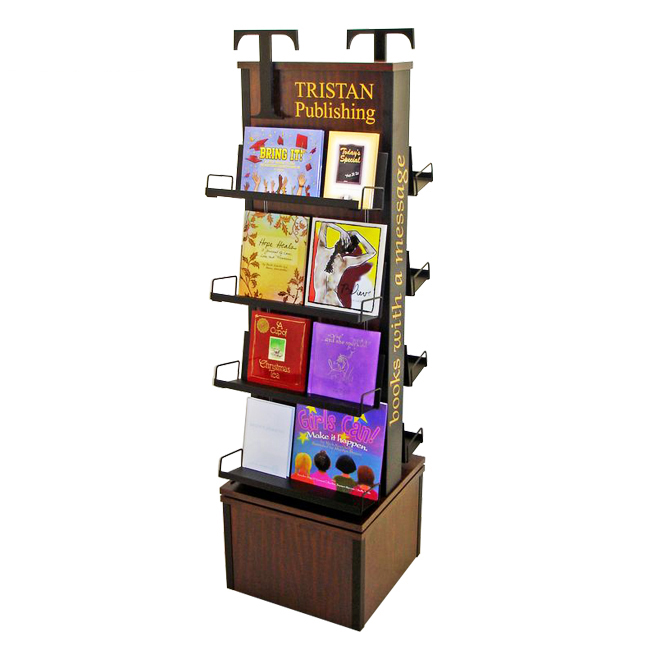
Create Gift Displays Around the Reason to Buy
Gift shoppers rarely think in manufacturing categories. They respond to recipient, occasion, mood, and budget. Wooden displays can bring unrelated objects together without making the presentation look temporary.
Build an occasion island
Combine a restrained header with two or three product levels for a birthday, travel, housewarming, or self-care story. Place the hero gift near eye level, supporting products within easy reach, and inexpensive additions toward the front. The arrangement should look complete even when one SKU sells out.
Use cubbies for small crafted goods
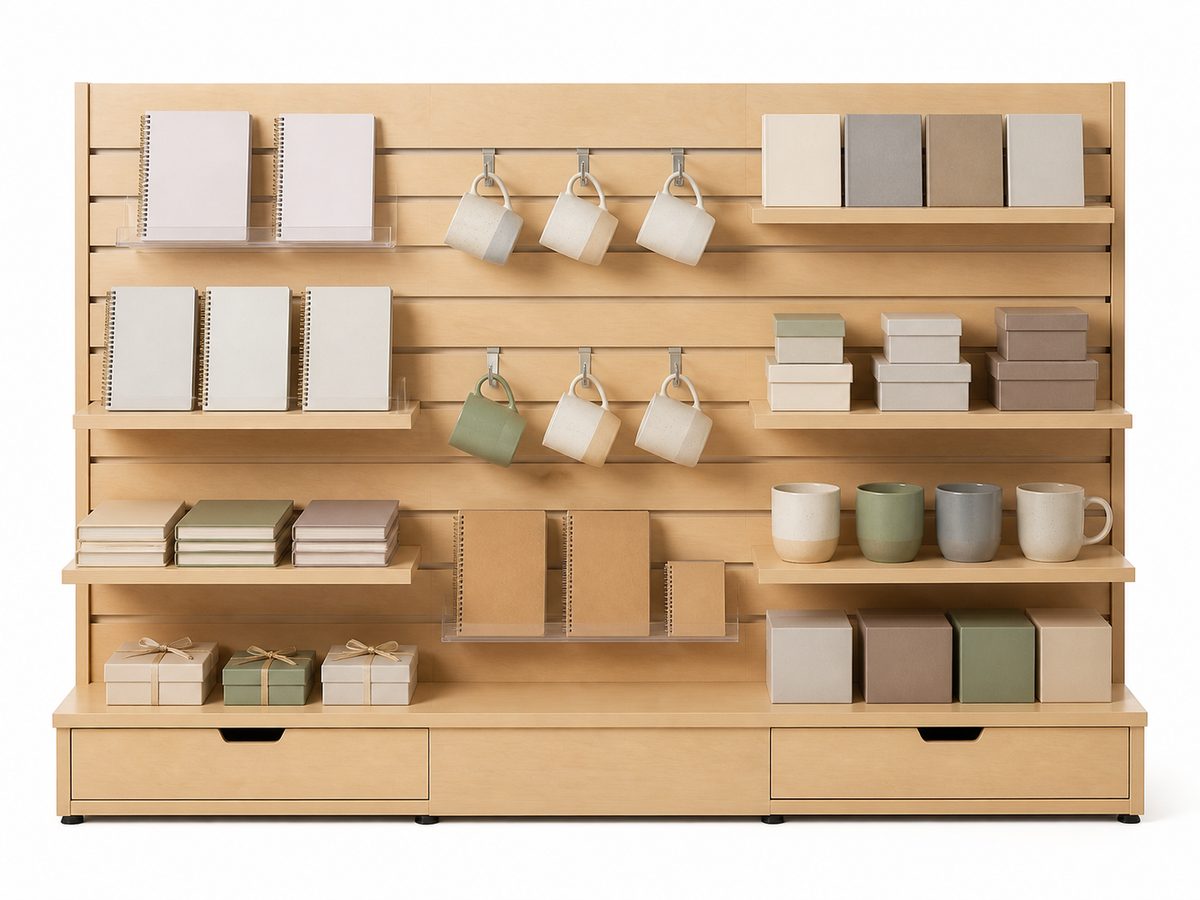
Cubbies give ceramics, candles, soaps, and local crafts individual space while maintaining a coherent wall. Varying every opening creates visual noise, so use a limited module family and removable inserts for smaller items. Finger access and label visibility matter as much as appearance.
Make premium gifts feel protected, not hidden
A focused shelf, glazed cabinet, or lit recess can signal value. Security hardware, door swing, reflections, ventilation, and staff access should be resolved before adding decoration. Premium presentation fails when customers cannot see details or staff struggle to retrieve a product.
Treat Book Displays as Editorial Space
A bookstore display should express a point of view while preserving navigation. Face-out covers generate discovery; spine-out shelving carries range. The useful balance changes by location and campaign.
Let the feature table make one argument
A table works best with a clear theme such as new fiction, independent publishers, travel writing, or illustrated cooking. Two elevations usually create sufficient rhythm. Too many risers fragment the message and increase the time needed to replenish it.
Break long shelving into readable bays
Category signs, face-out ledges, and consistent shelf spacing help customers scan a wall without fatigue. Oversized books may need a deeper lower zone, while standard titles can occupy shallower adjustable shelves. The highest stock must remain safe for staff to reach.
Use spinners only for compact ranges
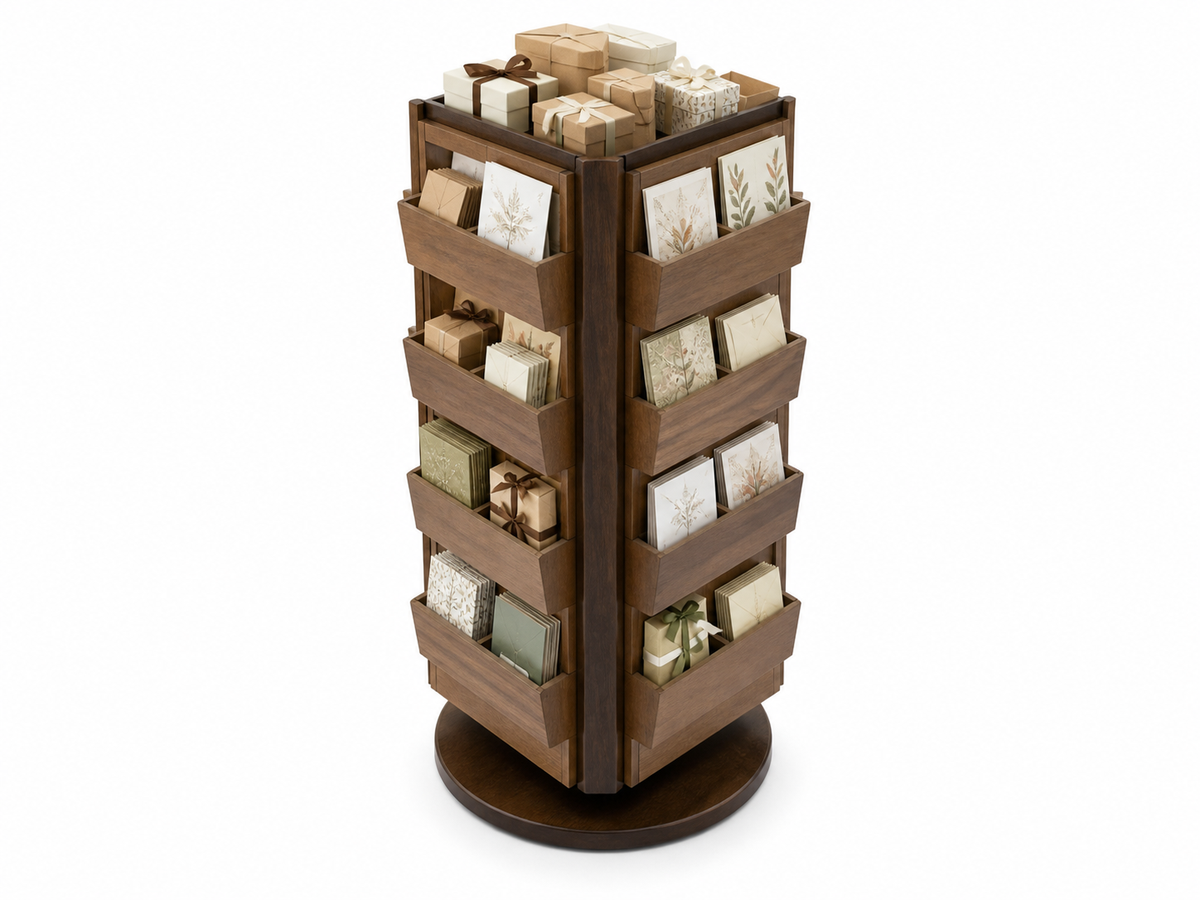
Rotating wooden fixtures suit bookmarks, cards, pocket guides, and other narrow selections. They are less effective for broad subjects that customers expect to see together. Test rotation with uneven loading because a perfectly balanced sample does not represent daily use.
Plan the Transition Between Browsing and Buying
The route from discovery to checkout contains valuable but sensitive selling space. Displays here should encourage an additional choice without narrowing the path or overwhelming the main purchase.
Keep queue displays edited
Greeting cards, journals, wrapping accessories, reading lights, and small gift add-ons work near payment. Limit the assortment, keep prices visible, and preserve the cashier sightline. Rounded corners reduce collisions with bags and coats.
Make cross-merchandising believable
Pair products only when the relationship is obvious: a cookbook with utensils, a travel title with a journal, or a candle with a small gift set. Random combinations may raise fixture capacity but weaken shopper confidence.
Choose a Format by Retail Task
A compact comparison can prevent design discussions from becoming purely aesthetic. The format should follow the merchandise, viewing distance, and staff routine.
| Retail task | Useful format | Main check |
| Occasion story | Low island or tiered stand | Can shoppers read it from the approach? |
| Book discovery | Feature table or face-out bay | Is the theme clear without excess stock? |
| Compact add-ons | Countertop unit or spinner | Can one item be removed easily? |
| Premium range | Focused shelf or cabinet | Are access, glare, and security resolved? |
These directions are starting points. Product weight, dimensions, stock depth, customer access, and available floor area still determine the final engineering.
Design for Seasonal Change Without Looking Temporary
Gift and book stories may change monthly, while the fixture should last for years. A stable wooden body can support controlled updates when changeable parts are planned rather than improvised.
Separate permanent and campaign elements
Keep structural shelves, bases, and load-bearing panels neutral. Use replaceable headers, magnetic graphic areas, removable risers, and exchangeable trays for campaign content. This approach protects the finish and reduces replacement cost.
Give store teams a simple reset system
A practical reset kit should include:
A labelled position for every removable shelf, tray, and divider
Approved graphic sizes and attachment methods
A short sequence for changing the display safely
Spare hardware identified by component rather than loose mixed parts
The system should be understandable without specialist tools. If a seasonal reset requires measuring every shelf or interpreting a technical drawing, stores are likely to improvise.
Prototype With Real Merchandise and Real Tasks
A clean sample can conceal weak capacity, awkward reach, and slow replenishment. Load the prototype with the lightest, heaviest, smallest, and largest planned products, then test it under realistic store conditions.
Observe a customer interaction
Check what is visible on approach, at arm’s length, and from the side. Products should be removable without disturbing neighbouring items. Fragile gifts need protection from collision points, while books need stops that prevent face-out copies from sliding.
Rehearse replenishment and cleaning
Staff should reach reserve stock, open doors, and return trays without entering the main customer path. Cleaning tools need access to the floor and lower edges. This short rehearsal often identifies more useful changes than another rendering review.
Prepare a Production Brief That Can Be Quoted
A manufacturer can only price and engineer what the buyer defines. Supply store photographs, a marked floor plan, product dimensions and weights, target facings, reserve-stock needs, artwork zones, security requirements, order quantity, delivery markets, and campaign life.
Define what may move and what must stay fixed
Adjustable shelves and removable graphics support merchandising, but bases, safety braces, electrical routes, and critical joints may need to remain fixed. Stating this boundary early prevents unsafe store modifications.
Match material combinations to actual needs
Within TP Display’s published range are wooden floor stands, countertop units, rotating displays, shelving, and structures combining wood with metal or acrylic. Workshop information covers wood processing alongside metal, acrylic, packing, and material storage. Those capabilities are relevant when a wooden presentation needs discreet reinforcement, transparent holders, mobility, lighting, or flat-pack construction. Drawings and a loaded sample should confirm the selected solution.
Conclusion
Gift shops need displays that organise occasion, value, and mixed product shapes. Bookstores need editorial focus, category clarity, and a deliberate balance between visible covers and stock capacity. The best wooden fixtures respond to those differences instead of repeating one retail formula.
When the store map, merchandise, seasonal updates, and staff routines are tested together, the display becomes both a visual asset and a dependable selling tool.
FAQ
What wood finish suits a gift shop?
Natural tones suit craft-led stores; painted finishes suit cleaner branded interiors.
How deep should bookstore shelves be?
Use the largest planned book format to set depth, with separate zones for oversized books.
Can one fixture support seasonal campaigns?
Yes. Use replaceable graphics, removable risers, and adjustable trays on a durable base.
Are wooden spinners suitable for books?
They suit compact books and accessories, but not broad categories that need one clear view.
When should lighting be added?
Add lighting only when it improves visibility enough to justify wiring and maintenance.
What should a prototype confirm?
Confirm capacity, stability, access, replenishment, finish, graphics, assembly, and packing.
Post time: Aug-26-2026