Choosing a wooden display stand by appearance alone often creates a fixture that looks convincing in a rendering but performs poorly in the store. The more useful question is what the stand must do: carry stock, protect sightlines, invite browsing, organise a changing assortment, or deliver a branded experience within a fixed footprint.
The ten formats below are organised by retail function rather than by one repeated product template. They reflect wooden and mixed-material structures visible across TP Display’s product portfolio, including floor stands, countertop units, rotating fixtures, double-sided displays, wall systems, storage bases, and wood combined with metal or acrylic.
Start With the Space the Fixture Must Occupy
A retailer should first mark the exact selling zone and the directions from which shoppers approach. Against-wall positions favour single-sided structures. Open aisles reward multi-sided access. Checkout and consultation counters need compact units that preserve visibility. Narrow stores may require the wall to carry the presentation instead of the floor.
This positional decision immediately removes unsuitable formats. Product size, weight, capacity, and campaign duration then refine the choice.
Capacity-Led Displays for Main Aisles
High-capacity fixtures need to hold enough merchandise without becoming visually heavy or obstructing circulation. Two formats dominate this role, but they create different shopper access patterns.
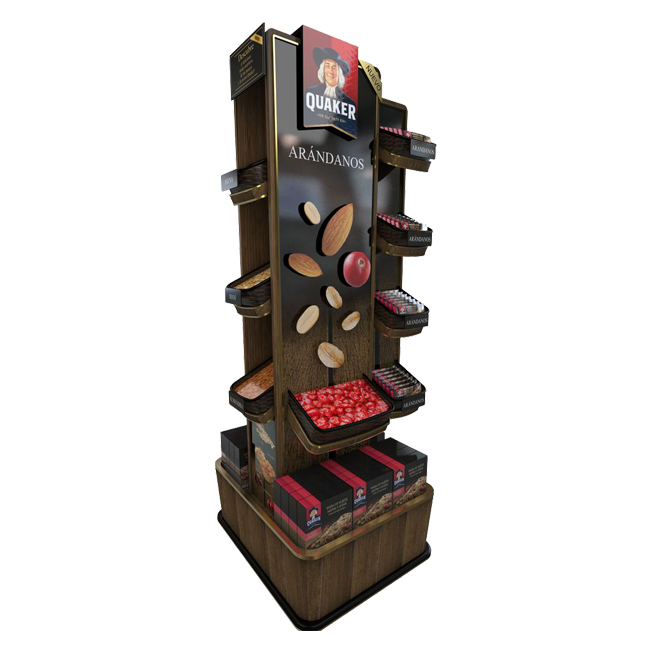
Floor-standing shelf displays
A single-sided floor stand works beside walls, at aisle edges, or in promotional zones. Fixed shelves provide rigidity for a stable assortment; adjustable shelves accommodate changing pack heights. Side panels strengthen brand presence, although excessive depth can hide products from diagonal views. Books, personal care products, packaged food, beverages, toys, and small appliances can all use this format when shelf spans and loads are correctly engineered.
Double-sided wooden gondolas
A gondola turns open floor space into a compact category island. Customers approach from both directions, and the end panels can carry graphics or additional products. The centre spine must support the combined load of both faces. Staff also need enough room to replenish one side without disrupting shoppers on the other.
Compact Formats for Counters and Small Footprints
Compact fixtures operate at close viewing distance. They should edit the assortment, keep labels visible, and remain stable as customers remove products unevenly.
Countertop display stands
Countertop units suit cosmetics, electronic accessories, confectionery, cards, and small gifts near checkout or service areas. Their base must resist tipping, and their height should not block staff visibility. Removable trays or dividers make cleaning and product resets easier.
Tiered and stepped displays
Tiered construction raises the rear rows so several products remain visible at once. It works particularly well for bottles, fragrances, books, and curated gift sets. The rise, depth, and product-stop height should be tested with the smallest and largest packs; otherwise lower labels disappear or the stand becomes unnecessarily deep.
Wall-mounted wooden systems
Wall fixtures preserve floor area and can create a permanent branded perimeter. Shelves, rails, hooks, illuminated panels, and cabinets may share the same vertical system. Installation is part of the product: wall construction, fixing points, maximum projection, cable access, and installer responsibility must be defined before production.
Displays Designed to Slow the Shopper Down
Discovery-led categories need more than capacity. They need a fixture that encourages customers to turn, touch, compare, and notice relationships between products.
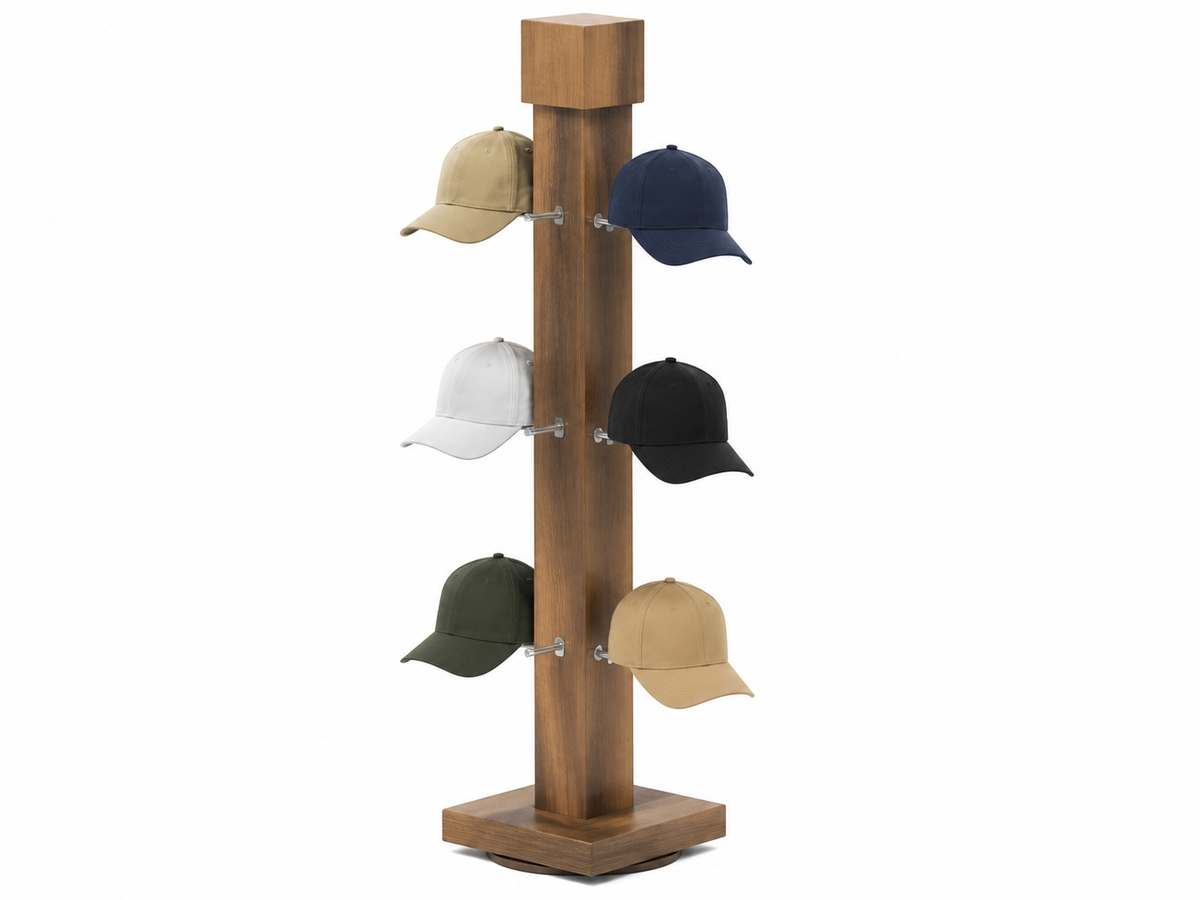
Rotating display towers
A rotating tower presents several faces within a limited footprint and is useful for cards, hats, socks, accessories, and other small SKUs. The bearing must turn smoothly under load. Balance should be tested when one face is full and another is almost empty, because that condition is more realistic than a perfectly stocked sample.
Wooden display tables
Tables invite direct handling of apparel, books, homeware, and seasonal collections. Nesting sets create several elevations and allow staff to change the composition. A successful table balances visual openness with edge durability, leg stability, floor levelling, and enough clearance for customers to move around it.
Structures for Frequent Assortment Changes
When the product mix changes often, the body of the fixture should remain useful while the accessories move. Two structures support that flexibility in different ways.
Slatwall and peg-panel stands
Grooved or perforated wooden panels accept hooks, shelves, baskets, and holders. They are practical for pet accessories, tools, packaged electronics, and footwear add-ons. Flexibility depends on a consistent slot or hole pattern, reinforced panel construction, and accessories rated for their actual loads.
Cabinet and storage-base displays
A storage base keeps replenishment stock close to the selling area while the upper display may use shelves, testers, screens, or lighting. This format suits staffed beauty, electronics, and premium-product zones. Door swing, lock type, internal capacity, ventilation, and protection from cleaning equipment should follow store operations.
Hybrid Construction for Higher Demands
Wood can provide the visible brand surface without carrying every structural function. A hybrid fixture uses secondary materials only where they improve performance.
Wood-and-metal display stands
Steel tubing or sheet can reinforce long shelf spans, narrow frames, heavy products, and wheeled bases. Wood panels then provide texture, colour, and space for graphics. Joint tolerances, coatings, attachment points, and protection between unlike finishes need coordinated approval.
Acrylic trays can improve product visibility, while wire dividers organise loose merchandise. Lighting and screens may add demonstration value, but they also introduce cables, drivers, ventilation, service access, and replacement requirements. These elements should earn their place by solving a real merchandising problem.
A Selection Method That Buyers Can Actually Use
The ten types become easier to compare when one dominant constraint is identified. Capacity points toward floor shelving or gondolas. Limited footprint favours countertop, tiered, wall, or rotating formats. Frequent range changes favour accessory panels. Staff-intensive departments may justify storage bases. Heavy or technical products often benefit from hybrid construction.
Before requesting a quotation, prepare the following information:
• The exact floor, wall, counter, or aisle position
• Product dimensions, unit weights, facings, and stock depth
• Maximum fixture width, depth, height, and circulation clearance
• The number of customer access sides
• Adjustment, storage, mobility, lighting, or security requirements
• Order quantity, delivery market, campaign life, and assembly resources
Why Manufacturing Range Matters
TP Display publishes wooden floor stands, countertop displays, rotating fixtures, multi-sided units, wall and shelf products, and combinations of wood with metal or acrylic. Its workshop information covers wood panel processing, edge banding, metal and acrylic work areas, packing, and material storage.
This range allows the design to follow retail performance rather than a single production method. A dimensional drawing and a merchandise-loaded prototype should still confirm capacity, access, stability, graphics, and packing before bulk production.
Conclusion
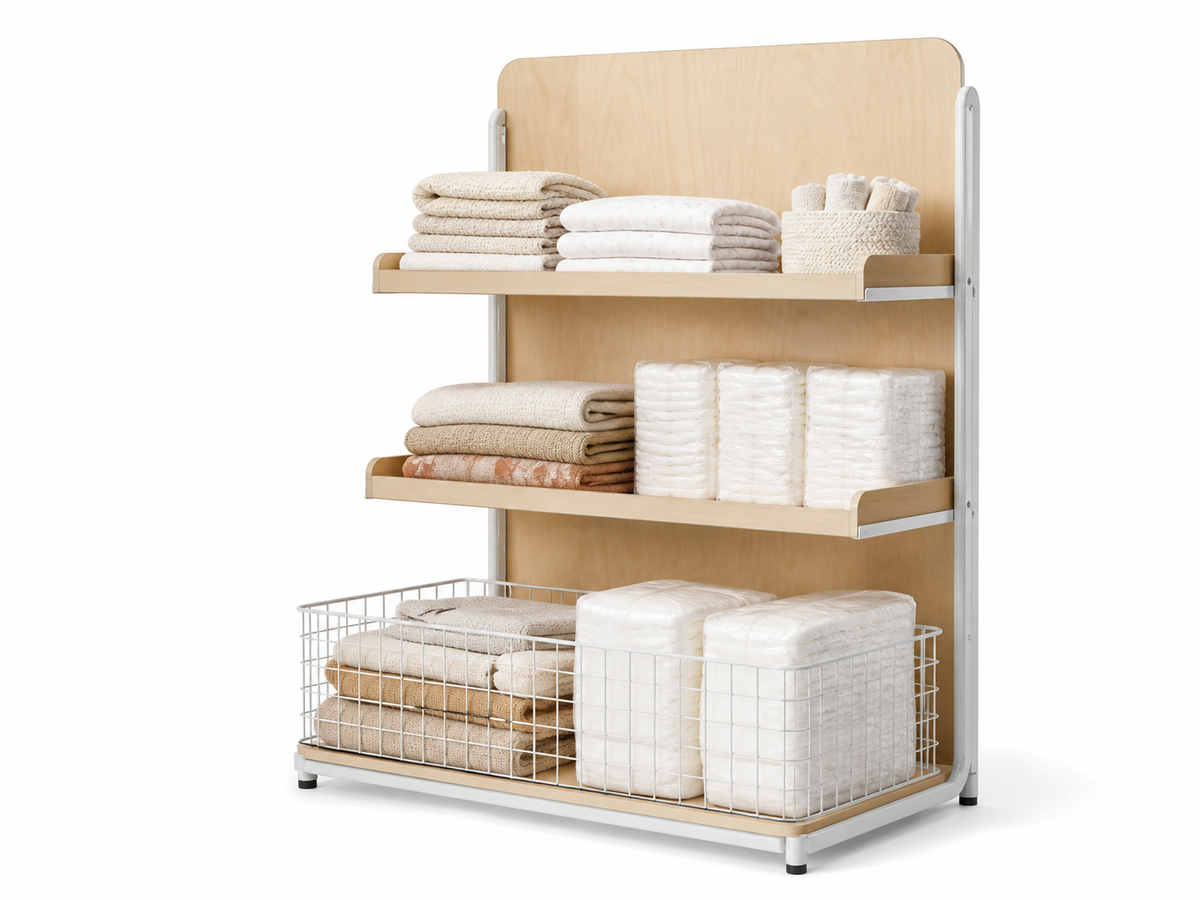
The ten types of wooden display stands solve different retail constraints. Floor shelves and gondolas create capacity. Countertop, tiered, and wall systems preserve space. Rotating towers and tables support discovery. Slatwall and storage bases improve flexibility. Hybrid structures handle greater loads and technical functions.
Choosing the structural family before developing decoration gives retailers a clearer brief, more comparable quotations, and a fixture that works after it reaches the selling floor.
FAQ
Which wooden display type is best for an open aisle?
A double-sided gondola or stable multi-sided fixture usually uses open circulation more effectively than a single-sided wall display.
Which format saves the most floor space?
Wall-mounted, countertop, tiered, and rotating displays can all be space-efficient. The right option depends on product size, capacity, and customer access.
Can one display combine shelves and hooks?
Yes. Slatwall, peg panels, modular backboards, and hybrid frames can support shelves, hooks, baskets, trays, and graphic holders.
Which type is easiest to update?
Accessory-based slatwall or peg-panel fixtures and adjustable shelf systems provide the greatest assortment flexibility.
When is wood-and-metal construction preferable?
Hybrid construction is useful for heavy products, long spans, wheeled units, narrow frames, or fixtures with technical accessories.
Should a buyer select a type before requesting a quote?
A preferred type helps, but merchandise data, location, capacity, and operating constraints allow the manufacturer to recommend a better alternative when necessary.
Post time: Aug-26-2026