A metal display rack does more than hold merchandise. It determines how easily shoppers notice a product, understand the range, compare options, and return an item to the correct place. The wrong rack can leave valuable stock hidden, create constant replenishment work, or consume more floor space than the sales it produces. The right one turns the same inventory into a clearer and more flexible retail presentation.
Retailers therefore need to compare rack types by merchandising task rather than appearance alone. Product weight, package shape, stock depth, shopper access, aisle width, campaign duration, and store operations all influence the decision. The following ten formats cover the most useful metal display rack options for supermarkets, specialty shops, convenience stores, hardware retailers, apparel stores, and branded promotions.
What Makes a Metal Display Rack Effective in Retail?
Effective racks balance four jobs: they carry the required load, make products easy to shop, support fast replenishment, and fit the visual language of the store. Metal is especially useful when a display needs strength, repeatable production, slim structural sections, or accessories that can be reconfigured. A good specification begins with the merchandise and the store journey, then chooses the structure that supports both.
Gondola Shelving for High-SKU Retail Aisles
Gondola shelving is the workhorse of many retail floors. A freestanding double-sided unit can define an aisle, while a single-sided version can sit against a wall. Adjustable metal shelves allow planograms to change as pack sizes and product mixes evolve. End panels and top signs can also turn a standard fixture into a branded category destination.
Best use cases
Choose gondola units for packaged groceries, household products, health and beauty ranges, and other categories with many SKUs. Confirm shelf load, upright spacing, base depth, and anti-tip requirements before ordering. Dense stock benefits from deeper shelves, but excessive depth can make smaller packs harder to see.
Pegboard Racks for Organized Hanging Merchandise
Pegboard racks use a perforated metal panel with movable hooks, brackets, or small shelves. They are valuable when products vary in length or package width because the layout can be altered without rebuilding the frame. The upright presentation creates strong visibility and keeps individual items separated.
Match hooks to the merchandise
Pegboard is particularly suitable for tools, accessories, packaged parts, stationery, and compact electronics. Hook diameter, length, spacing, and label-holder position should match the product load. For heavier merchandise, the panel thickness, frame reinforcement, and center of gravity matter as much as the hook itself.
Slatwall Racks for Flexible Product Presentation
Slatwall-style racks provide horizontal channels that accept shelves, hooks, baskets, or sign holders. This gives visual order while retaining more flexibility than fixed shelving. Metal frames can be combined with melamine or other panel materials when the retailer wants warmth without giving up a durable structure.
Where slatwall adds value
Use this format for footwear, sports accessories, gift items, packaged hardware, and seasonal ranges that change frequently. The accessory system should be standardized across the rollout so stores can replace or rearrange components without requesting a new fixture.
Wire Basket Racks for Irregular Pack Formats
Wire baskets present loose, soft, or irregularly shaped packs that do not sit neatly on a flat shelf. Open construction keeps the display visually light and makes stock levels easy to check. Angled or tiered baskets can expose more product faces than a deep bin.
Control access and replenishment
Basket racks work well for snacks, bread, pet products, toys, and promotional packs. Openings must be small enough to retain the product but large enough for cleaning. Front height should prevent spill-out without forcing shoppers to reach awkwardly into the basket.
Hybrid Shelf-and-Hook Displays for Cross-Merchandising
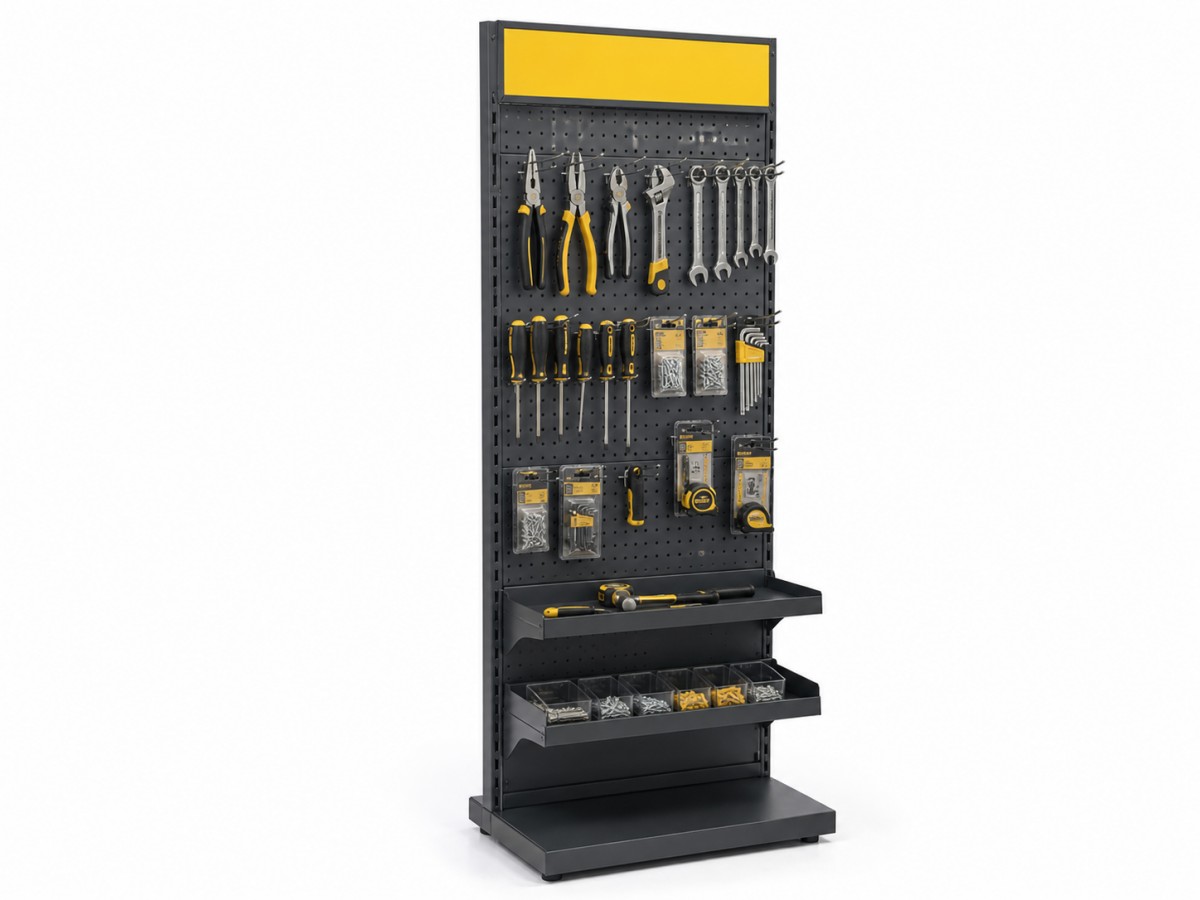
A hybrid fixture combines shelves for boxed goods with hooks for hanging accessories. It is useful when a retailer wants to merchandise a complete solution rather than one package format. A tool display, for example, can place larger cases on shelves and related blades, fasteners, or accessories above them.
Design around product relationships
The strongest hybrid displays organize complementary products in the order customers use them. Shelf pitch, hook zones, graphics, and price communication should make those relationships obvious. Avoid adding every possible accessory; an overloaded frame reduces clarity and makes replenishment inconsistent.
Rotating Display Stands for Compact Browsing
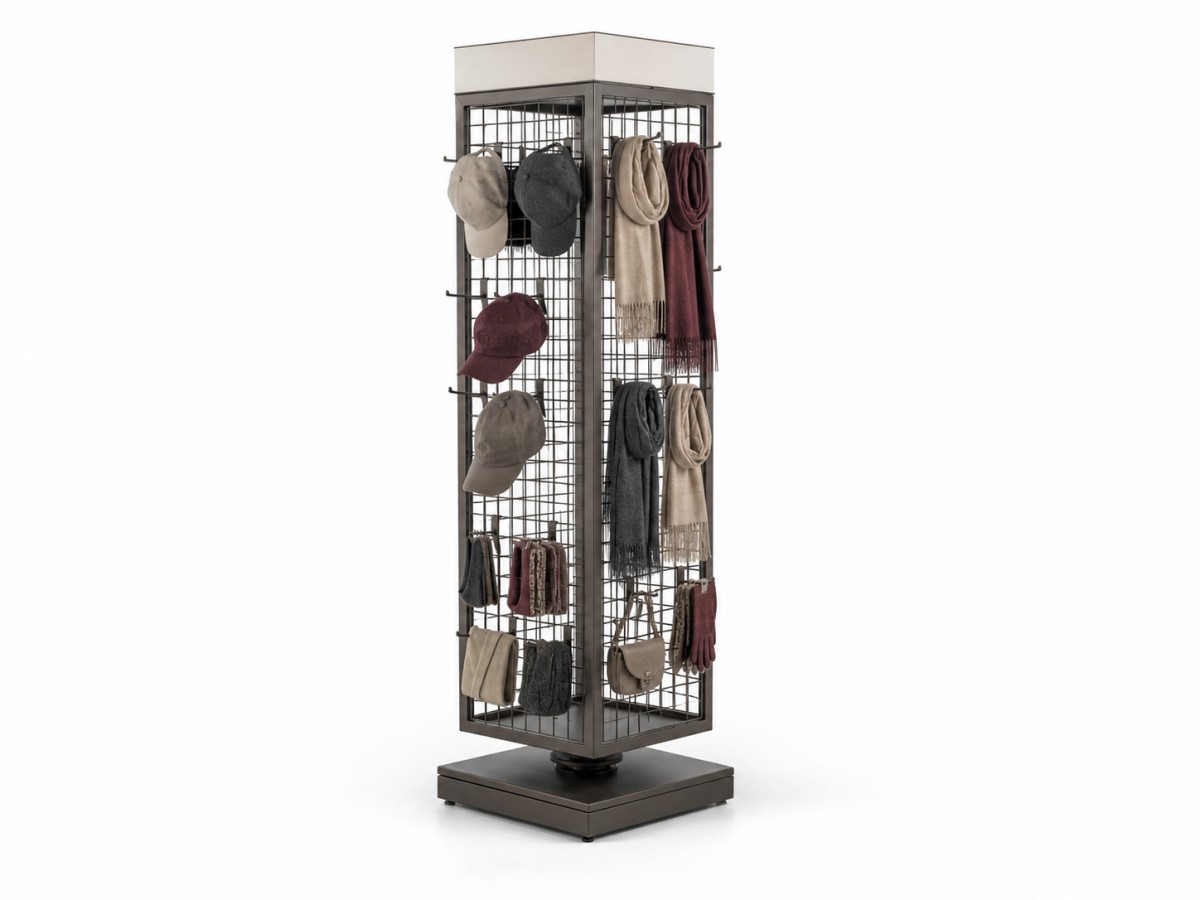
Rotating stands create high display capacity within a compact footprint. Shoppers can browse several faces without walking around the fixture, making this format effective near service counters, aisle intersections, or small specialty stores. Rotation also adds interaction, but the mechanism must remain stable when the load is uneven.
Plan for balance and reach
Common uses include hats, socks, cards, accessories, and small packaged goods. Specify the loaded diameter, base weight, bearing quality, and minimum aisle clearance. The highest and lowest product positions should remain reachable for the intended customer group.
Mobile Display Racks for Flexible Store Operations
Mobile racks allow teams to reposition stock for daily promotions, cleaning, or changing traffic patterns. They are especially practical for bakery products, event merchandise, and temporary displays. Locking casters keep the fixture in place after staff move it to the selling position.
Mobility should not reduce stability
The rack must be tested while fully loaded and while crossing small floor transitions. Wheel diameter, brake access, handle position, and overall center of gravity affect safe movement. Cables, loose signs, and protruding hooks should not create hazards during relocation.
Heavy-Duty Shelving for Dense and Bulky Products
Heavy-duty racks are engineered for dense or bulky products that exceed the practical capacity of lightweight promotional fixtures. Reinforced uprights, welded connections, shelf supports, and wider bases help carry items such as automotive products, hardware, appliances, paint, or large containers.
Verify loads rather than relying on appearance
A substantial-looking rack is not automatically a tested rack. Buyers should provide unit weight, quantity per shelf, loading method, and any expected impact from carts or product handling. The manufacturer can then define material thickness, bracing, shelf structure, and safety labeling.
Countertop Metal Displays for Impulse Categories
Countertop racks place compact products at eye level in checkout or service areas. They can support impulse purchases without taking additional floor space. Because the shopper sees them at close range, weld quality, edge finishing, graphics, and price-ticket alignment are more noticeable than on distant fixtures.
Keep the decision quick
Use countertop formats for cosmetics, small tools, batteries, confectionery, phone accessories, or sample-size products. Limit the assortment to a simple decision. The footprint must leave adequate working space for staff and should not block sightlines across the counter.
Branded Point-of-Sale Displays for Campaign Visibility
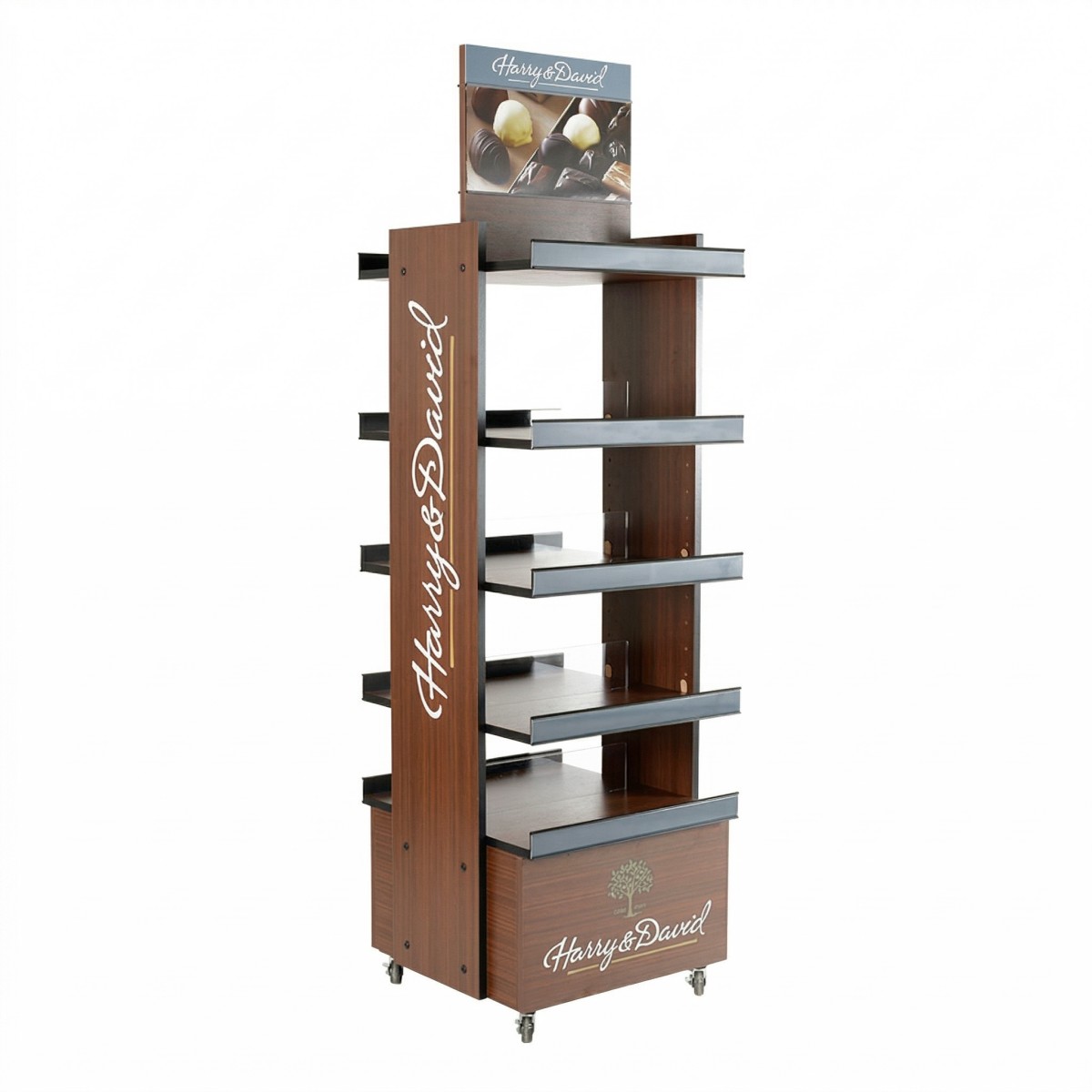
A branded point-of-sale display is developed for a specific product range, campaign, or retail channel. Metal provides a durable core, while printed panels, logos, color matching, and shaped headers communicate brand identity. These units may be temporary, semi-permanent, or designed for repeated seasonal use.
Make branding part of the structure
A logo panel should not be treated as an afterthought. Graphic zones, product facings, lighting conditions, and viewing distance need to be coordinated during design. The most effective display keeps the brand visible after shelves are full and after inventory becomes partially depleted.
How to Choose the Right Metal Display Rack
Start with a short operational brief rather than a preferred rack style. The range of available formats—from pegboard tool stands and basket displays to slatwall shelves, mobile bakery racks, rotating apparel stands, and heavy-duty hardware fixtures—shows how different retail problems lead to different constructions. Before requesting a quotation, document the following points:
• Product dimensions, unit weight, packaging type, and quantity per facing
• Target stores, available footprint, aisle clearance, and viewing direction
• Required shelf, hook, basket, signage, and price-label configuration
• Expected service life, relocation frequency, and cleaning conditions
• Brand colors, graphic files, packaging limits, and assembly expectations
A manufacturer can work faster when these facts are clear. The resulting design should then be reviewed in a loaded state, not as an empty rendering. That is where access, capacity, balance, blocked graphics, and replenishment problems become visible.
Conclusion
There is no universal metal display rack for every retail store. Gondola and slatwall systems favor flexible ranges; pegboard and hybrid fixtures organize accessories; baskets handle irregular packs; rotating and mobile racks solve space and movement problems; heavy-duty shelving carries demanding loads; and branded POS displays focus attention on a specific offer. The best choice is the one that connects product behavior, shopper behavior, and store operations in a stable, manufacturable design.
uently Asked Questions
The following answers address practical questions buyers often raise while comparing metal retail fixtures.
Which metal display rack is best for a small store?
A rotating stand, wall-side slatwall rack, or narrow freestanding unit usually uses limited space efficiently. The answer depends on whether capacity, browsing access, or assortment flexibility is the main priority.
Can metal display racks be customized for different package sizes?
Yes. Adjustable shelves, repositionable hooks, removable baskets, and interchangeable graphic panels can accommodate multiple pack formats. The manufacturer still needs accurate dimensions and loaded weights.
Are metal racks suitable for branded promotions?
Yes. Powder-coated colors, printed headers, side panels, logos, and product-specific layouts can turn a metal frame into a branded display while preserving durability.
What information is needed before requesting a quotation?
Provide product details, desired capacity, store footprint, reference images, branding requirements, order quantity, destination, and assembly preference. A simple sketch or product sample can resolve ambiguities early.
Post time: Aug-20-2026