Choosing a custom metal display rack manufacturer is not simply a search for welding capacity. Global brands need a partner that can convert a merchandising idea into a repeatable retail fixture, protect visual consistency across stores, control loaded performance, and package the result for practical international delivery. A rack can look convincing in a rendering yet fail when real products, store staff, freight handling, and installation are introduced.
The most reliable OEM programs treat the display as both a selling tool and a manufactured product. That means design, engineering, sampling, fabrication, finishing, quality control, packaging, and reorder management must connect from the start. Buyers who evaluate this complete system can compare manufacturers on commercial risk, not price alone.
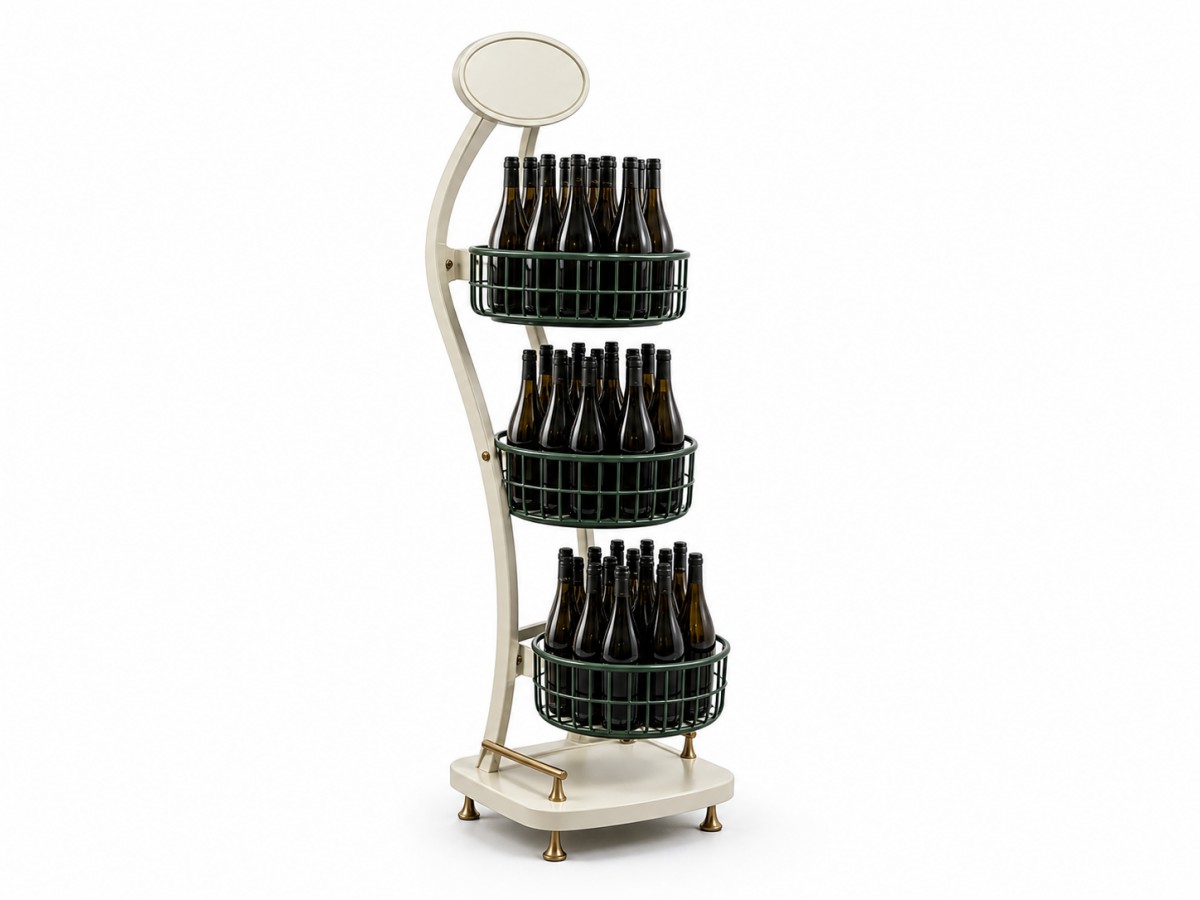
OEM Begins With a Retail Problem, Not a Drawing
A useful brief explains what the display must achieve in the store. Is it introducing a new range, increasing stock capacity, organizing accessories, improving brand visibility, or replacing a fixture that is difficult to replenish? The manufacturer should understand the product, shopper interaction, placement, campaign duration, and rollout scale before proposing a structure.
A strong first brief includes product samples or dimensions, loaded weight, desired facings, available footprint, viewing direction, brand assets, target markets, expected order volume, shipping destination, and installation conditions. Reference images can communicate taste, but they should not substitute for measurable requirements.
• Product file: dimensions, unit weight, packaging, facings, and loaded capacity.
• Store file: footprint, aisle clearance, viewing direction, access, and installation limits.
• Brand file: approved artwork, color references, graphic hierarchy, and campaign life.
• Commercial file: order volume, destination, timing, packing preference, and approval owners.
Translate the Brief Into an Engineering Specification
The engineering specification turns commercial goals into dimensions and tolerances. It defines overall size, shelf spacing, hook positions, basket geometry, load per level, base stability, graphic zones, and connection methods. It should also identify which components are adjustable and which must remain fixed to preserve structural performance.
Design around the loaded fixture
Reviews should show actual package sizes and realistic stock quantities. This exposes blocked graphics, poor reach, wasted vertical space, and top-heavy loading before metal is cut. For regional programs, check local aisle widths, average shopper height, accessibility needs, and retailer-specific fixture rules.
Select Materials and Construction Methods Deliberately
Steel tube, sheet metal, wire, perforated panels, and expanded metal each serve different functions. The correct combination depends on span, weight, visibility, cost, and finish. Welded frames offer rigidity, while bolted or tab-and-slot assemblies can reduce shipping volume. Laser cutting, punching, bending, welding, grinding, and polishing must be planned as one production sequence.
Buyers should ask why a material thickness or joint method was selected. Overengineering adds unnecessary weight and freight cost; underengineering creates deflection, instability, and early failure. A capable manufacturer should be able to explain the trade-off in plain commercial terms.
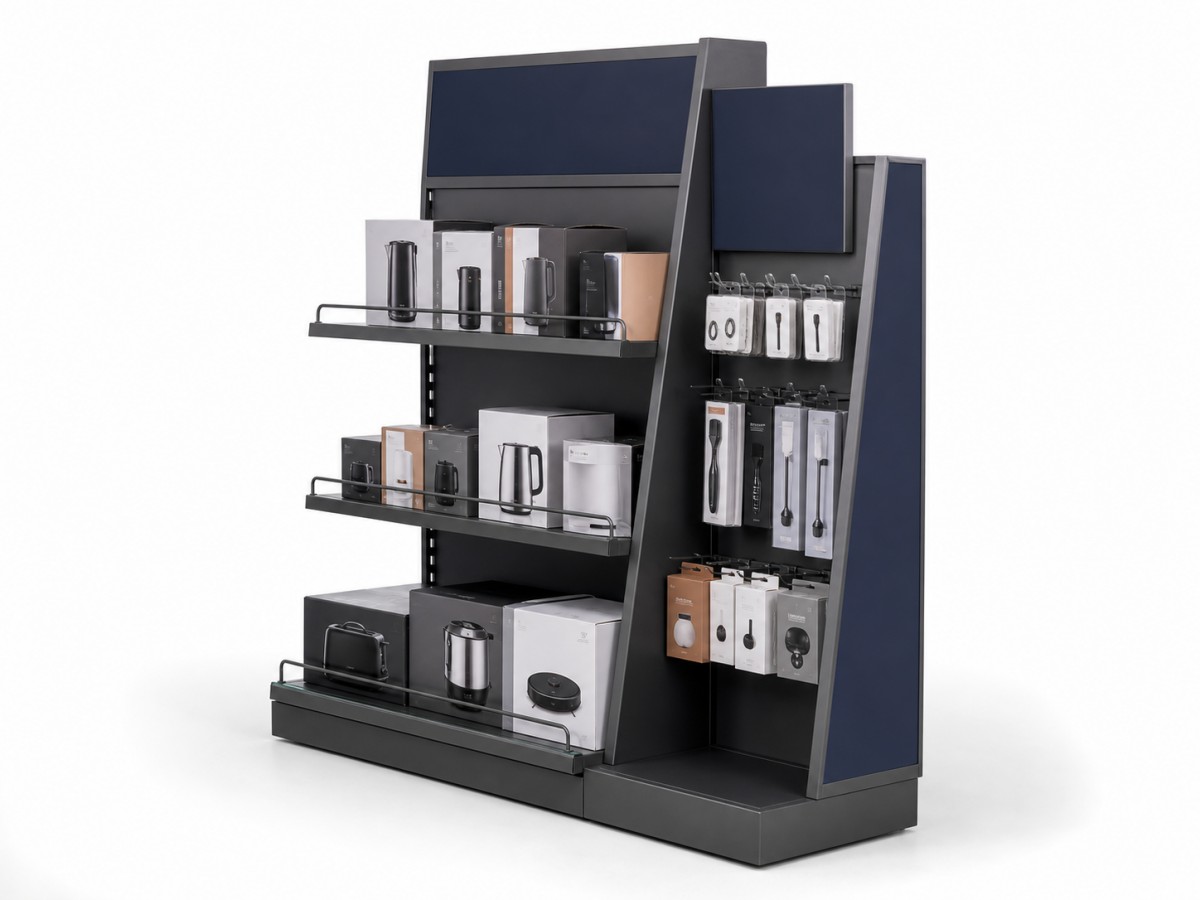
Prototype Before Committing to Bulk Production
A prototype is the first physical test of the assumptions in the drawing. Load it with real merchandise, operate every adjustable part, apply the graphics, assemble it using only the proposed instructions, and view it under store-like lighting. Photograph issues and record revisions in a controlled approval file.
Sample timing varies with fixture complexity, material availability, graphics, and finishing. The approval schedule should include time for evaluation and possible revision rather than treating the first physical unit as an automatic production release. Skipping this stage to gain a few days can multiply a small defect across an entire rollout.
Build Brand Identity Into the Display Architecture
OEM customization should go beyond applying a logo to a generic rack. Brand color, silhouette, header shape, product rhythm, negative space, and material contrast can make a display recognizable from across the store. At close range, consistent edge finishing, aligned graphics, and orderly price communication reinforce perceived quality.
Brand elements should also survive normal retail use. A header hidden by tall products, a side graphic damaged during replenishment, or a color that changes between production batches weakens the program. Define color references, approved artwork versions, print method, gloss level, and acceptable placement tolerance before production.
Control Powder Coating and Surface Finish
Surface finish affects appearance, corrosion resistance, cleaning, and touch. Powder coating is common for metal retail fixtures because it supports repeatable colors and a durable surface, but preparation and curing matter. Poor cleaning, inconsistent film thickness, or insufficient coverage around joints can produce visible defects.
Approval should use a physical color sample when brand accuracy is important. Inspection can include color comparison, adhesion checks, coverage around welds and internal corners, surface cleanliness, and protection against abrasion during packing. Cosmetic acceptance criteria should distinguish customer-facing zones from concealed areas.
Engineer the Rack for Shipping and Store Assembly
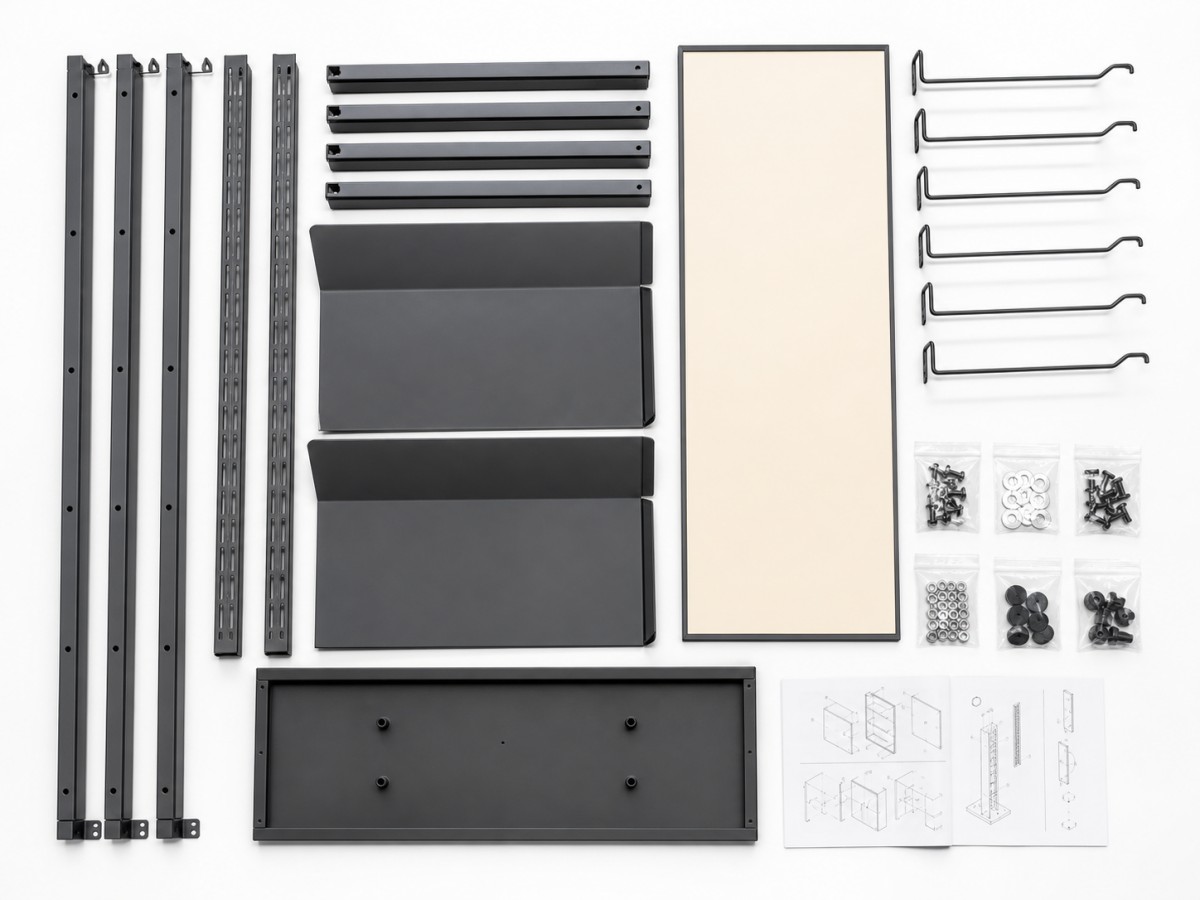
A design that ships fully assembled may be simple for stores but expensive in container space. A flat-pack design can improve freight efficiency, yet too many fasteners or confusing components increase installation time and error. The best solution balances cube utilization, component protection, assembly labor, and structural reliability.
Ask the manufacturer to conduct a timed assembly trial with people who did not design the rack. Parts should be labeled logically, hardware should be separated, and instructions should show orientation clearly. Installation manuals or assembly videos are especially useful for distributed rollouts where the manufacturer cannot supervise every store.
Establish Quality Gates That Match the Risk
Quality control should follow the failure modes of the fixture rather than rely on a final visual check. A practical OEM plan assigns evidence and responsibility at several points:
| Quality gate | What to verify | Risk controlled |
| Incoming material | Grade, dimensions, surface condition | Weak or inconsistent components |
| First article | Dimensions, fit, load, stability, graphics | Repeating an approved-design error |
| In-process | Welds, bends, hole positions, finish preparation | Hidden fabrication defects |
| Packing audit | Part count, protection, labels, instructions | Damage and missing components |
| Pre-shipment | Approved sample match and order quantity | Rollout inconsistency |
Critical dimensions deserve tighter controls than decorative ones. The approved sample, drawings, color standard, packaging specification, and change log should form one reference set so production and inspection teams are working from the same revision.
Plan Packaging, Logistics, and Reorders as One System
Export packaging must protect coated surfaces, projecting hooks, printed panels, and hardware through handling and stacking. Carton dimensions, gross weight, pallet pattern, moisture protection, spare-part allocation, and shipping marks should be reviewed before mass production. Packaging tests are especially important when several component shapes share one carton.
For repeat orders, control drawings, approved colors, tooling, and bill-of-material revisions. A global brand may reorder by region or replace damaged parts long after the initial launch. Component-level identification and archived specifications make that support faster and reduce unintended design drift.
Evaluate the Manufacturer Behind the Sales Presentation
A supplier audit should connect claimed capability to the proposed rack. Relevant questions include whether metal cutting, punching, bending, welding, grinding, polishing, and powder coating are handled through controlled processes; whether the factory can manage mixed materials and graphics; and how engineering changes are approved.
TP Display’s Foshan operation presents a metal workshop and production equipment that includes cutting, laser engraving, drilling, punching, bending, powder coating, welding, and polishing. Its company profile reports experience across more than 20 industries and over 500 custom designs. These facts are useful starting points, but buyers should still evaluate the specific product, capacity, documentation, and quality plan for their program.
Use a Stage-Gated OEM Workflow
A stage-gated process prevents commercial pressure from pushing an unresolved design into production. A practical sequence is:
Retail brief validation: Confirm the retail objective, product data, store constraints, and rollout volume.
Technical design approval: Approve the concept, engineering drawing, materials, finishes, and packaging direction.
Prototype verification: Produce and test a fully branded sample with real merchandise.
Specification freeze: Freeze the bill of materials, tolerances, artwork, quality criteria, and packing specification.
First-article release: Approve the first production article before the remaining quantity proceeds.
Delivery documentation: Complete inspection, packing verification, shipment documentation, and reorder records.
Mass-production scheduling should be confirmed against the approved specification, order quantity, finish, packaging, and factory load. A realistic project plan places artwork approval, sample revisions, first-article confirmation, inspection, and freight booking around production rather than treating them as afterthoughts.
Conclusion
A custom metal display rack manufacturer should help a global brand protect three things at once: retail performance, manufacturing repeatability, and rollout practicality. The strongest OEM relationships begin with a clear merchandising problem, verify the solution through a loaded prototype, control materials and finishes through documented quality gates, and design packaging and assembly for the destination market. This disciplined approach produces a fixture that is not only attractive on approval day, but dependable across stores, shipments, and reorders.
Frequently Asked Questions
These answers cover the main procurement questions that arise before an OEM metal display program begins.
What information does a manufacturer need for an accurate quotation?
Provide product dimensions and weights, display capacity, footprint, reference images, brand artwork, finish requirements, order quantity, destination, packaging expectations, and target timing. Unknown items should be identified rather than estimated silently.
How long does a custom metal display rack sample take?
Simple samples may move quickly, while complex mixed-material or highly branded fixtures require more time. Buyers should confirm the sample schedule only after materials, graphics, finishes, and approval responsibilities are defined.
Can custom racks be designed for flat-pack shipping?
Yes. Knock-down joints, nested parts, removable graphics, and organized hardware can reduce shipping volume. The design must still be tested for assembly time, stability, and repeated handling.
How can a brand maintain consistency across repeat orders?
Keep an approved sample, controlled drawings, color references, artwork files, bill of materials, inspection criteria, packaging specification, and revision history. Require written approval before any material or process change.
Post time: Aug-20-2026