Ordering a custom wooden display stand is a small product-development project, not a catalogue purchase. The buyer is defining a structure that must fit merchandise, survive handling, communicate a brand, move through an international supply chain, and remain practical for store staff. Decisions made before quotation determine whether later samples are useful or merely attractive.
A disciplined order begins with measurable retail requirements and moves through drawings, materials, prototypes, quality limits, packing, and rollout. The following procurement sequence explains what should be resolved at each stage and where buyers commonly lose time or control.
Confirm Why the Display Is Being Built
A manufacturer needs to know the commercial role before recommending construction. A permanent category fixture, seasonal promotional unit, branded shop-in-shop element, and temporary launch stand can look similar in a rendering but require different durability, adjustment, graphics, and packing.
Define the retail objective
State whether the display must increase visibility, organise a range, encourage product trials, support cross-selling, or replace existing shelving. One primary objective keeps later decisions consistent. If every possible benefit is treated as essential, the unit usually becomes larger and more expensive than necessary.
Set a realistic service life
Campaign length affects materials, hardware, finish, and replacement planning. A three-month activation may prioritise fast assembly and economical graphics, while a multi-year fixture needs stronger edges, adjustable components, repairable parts, and repeat-order control.
Measure the Merchandise Before the Stand
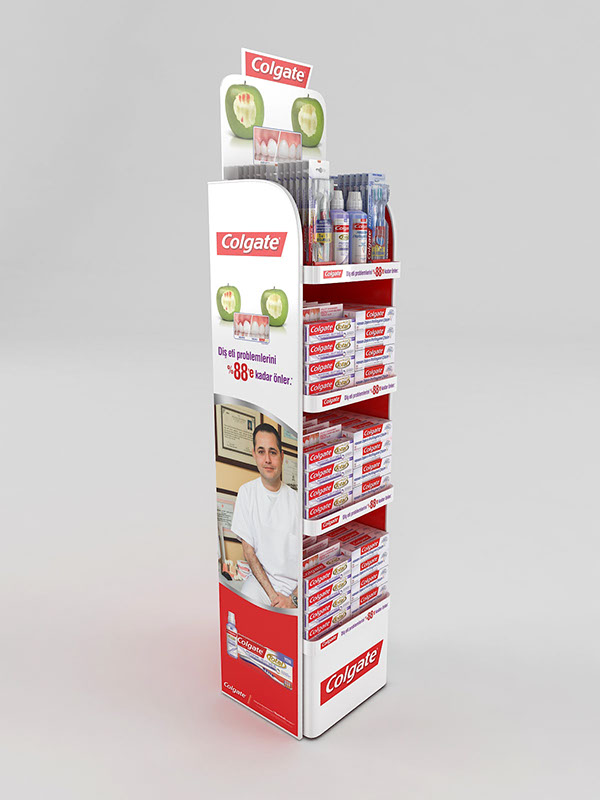
Fixture dimensions should grow from product data rather than from an empty floor area. Provide the manufacturer with the complete selling range, not only the hero item used in the concept image.
Record the load case
List individual product dimensions and weights, the number of facings, shelf quantity, reserve-stock depth, and the heaviest expected loading condition. Long shelves carrying dense products may require metal reinforcement even when the visible surface is wood.
Test product removal space
Usable capacity is lower than geometric capacity when hands cannot grip a pack or when the upper shelf blocks removal. Allow space for labels, product stops, hooks, security devices, testers, and packaging variations. A loaded drawing should show these clearances.
Document the Store Environment
The same stand behaves differently against a wall, in an open aisle, near a window, or beside checkout. Store conditions should therefore be part of the design brief rather than an afterthought.
Mark access and circulation
Identify the customer approach direction, the number of shoppable sides, nearby doors, aisle width, cleaning equipment, and staff replenishment route. Mobile fixtures also need caster type, brake access, thresholds, and a safe method for moving a loaded unit.
Identify environmental exposure
Direct sunlight, moisture, heat, high-touch use, and aggressive cleaning products influence finish selection. Electrical accessories introduce cable routes, ventilation, certification, and maintenance access. These conditions must be known before material approval.
Build a Quotation Package That Suppliers Can Price
Comparable quotations require comparable information. A short but complete request reduces hidden assumptions and makes cost differences easier to interpret.
Include the following items:
● A dimensioned product list with weights and target facings
● Store photographs or a floor plan showing the intended position
● Reference images with notes explaining what should and should not be copied
● Brand artwork, colour standards, graphics, lighting, and security requirements
● Order quantity, delivery markets, target date, and preferred packing method
Ask suppliers to separate tooling, sampling, unit production, packing, and freight assumptions. A lower unit price may exclude engineering work, protective packaging, or hardware that another quotation includes.
Choose Materials by Performance and Finish
The wood-display range published by TP Display includes plywood floor racks, oak tiered stands, bamboo countertop units with acrylic, and structures combining wood with metal. These examples show why “wooden display” is a visual category rather than one fixed material specification. The quotation should identify the actual substrate, thickness, finish, reinforcement, and exposed-edge treatment.
Use panel materials deliberately
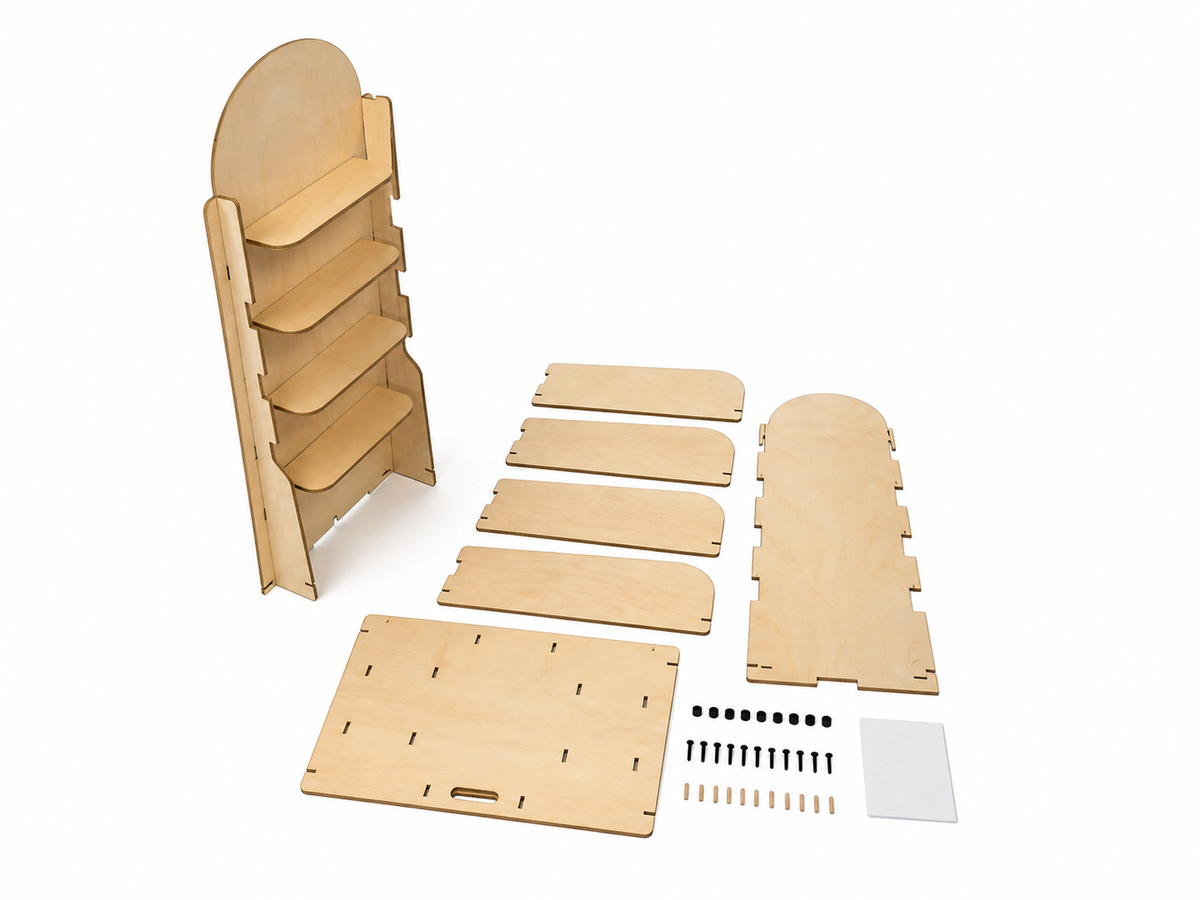
Plywood can provide structural efficiency for floor units, while bamboo or oak creates a different visual direction for natural-finish displays. Painted or laminated surfaces may suit branded graphics, but buyers should never approve “wood” as a complete specification. Ask for the exact core, thickness, coating, edge construction, moisture limitations, and approved physical sample.
Add other materials only when they solve a problem
Metal can reinforce spans, frames, wheels, and high-load joints. Acrylic improves product visibility and creates removable trays or sign holders. Lighting can support demonstration or premium presentation. Each addition should have a defined function, approved tolerance, and replacement method.
Turn the Concept Into an Approval Drawing
The drawing is the first production control document. It should remove ambiguity before money is spent on a physical sample and should be reviewed by merchandising, brand, logistics, and store-operation teams.
Check dimensions and interfaces
Approve overall size, shelf positions, clear openings, hardware, joints, graphics, cable paths, levellers or casters, wall fixings, and assembly sequence. Product silhouettes or simple pack models should appear in the drawing to verify capacity.
Freeze revision ownership
Use dated drawing versions and record who approved each change. Email comments alone are risky because separate teams may act on different instructions. One signed revision should become the reference for sampling.
Use the Prototype to Find Failure Modes
A prototype is valuable when it is tested as a retail tool. Approving colour and shape without loading, moving, cleaning, and packing the sample leaves the most expensive risks unresolved.
Load and operate the sample
Apply the maximum planned load, remove products unevenly, open every door, rotate moving parts, and perform a replenishment task. Check shelf deflection, tipping resistance, sharp edges, wobble, hardware access, label visibility, and customer reach.
Review the sample after transport
Pack the prototype using the intended method, simulate handling, and inspect it again after unpacking. Corners, painted edges, acrylic parts, graphic panels, and concealed hardware often reveal problems only after transport.
Define Quality Before Bulk Production
“Good quality” is not an inspection standard. Buyers and manufacturers need measurable limits tied to visible or functional failure.
Approve physical references
Keep signed material samples, colour chips, printed graphics, hardware, and a confirmed prototype or golden sample. Digital colour values cannot replace a physical finish reference under agreed lighting.
Write acceptance criteria
Define dimensional tolerances, colour variation, edge quality, surface defects, wobble, loaded stability, graphic position, hardware function, and packing condition. Inspection should focus on commercial risk rather than a generic checklist.
Plan Packing, Assembly, and Repeat Orders
A display is not complete when it leaves the production line. It must arrive undamaged, fit the receiving process, and be assembled correctly by the available team.
Compare assembled and flat-pack delivery
Assembled units reduce store labour but increase freight volume and exposure to impact. Flat-pack designs lower volume but require clear instructions, controlled hardware, and joints that tolerate repeated tightening. Evaluate total landed effort, not carton size alone.
Protect the specification for reorders
Retain approved drawings, material and colour codes, artwork files, packaging details, test results, and allowed substitutions. If a component changes, require confirmation before production so later batches remain compatible with the original rollout.
Why Manufacturing Capability Matters
Custom wooden displays often combine panel processing, edge finishing, metal reinforcement, acrylic holders, graphics, electrical accessories, and export packing. Coordination across these operations affects fit and repeatability.
The product range presented by TP Display includes wooden floor stands, countertop units, rotating displays, shelving, and mixed-material retail fixtures. Workshop information covers wood, metal, acrylic, packing, and material storage. This breadth is relevant when one supplier must coordinate several materials, although drawings, samples, testing, and written acceptance standards should still control the order.
Conclusion
A successful custom wooden display order starts with a retail objective and merchandise data, then moves through store conditions, a comparable quotation package, material selection, drawings, prototype testing, quality limits, and delivery planning. Skipping one stage usually shifts uncertainty into a more expensive stage.
Buyers who treat the fixture as an engineered retail product receive clearer quotations, faster approvals, safer production, and displays that remain useful after installation.
FAQ
What information is needed for a quotation?
Provide product data, store position, dimensions, graphics, quantity, delivery market, and packing requirements.
How should a buyer compare wood materials?
Compare the stated substrate, thickness, load, finish, edge protection, moisture exposure, freight weight, and approved sample.
Should a custom stand be prototyped?
Yes. A loaded prototype verifies capacity, stability, access, finish, assembly, and packing.
Can wooden displays be flat-packed?
Yes, when joints, hardware, instructions, and repeated assembly are engineered and tested.
What should be inspected before shipment?
Inspect dimensions, finish, stability, hardware, graphics, function, quantity, and packing condition.
How can repeat orders stay consistent?
Control approved drawings, material codes, colour samples, artwork, hardware, and substitutions.
Post time: Aug-26-2026