Ordering custom display stands is an important investment for retail brands, supermarkets, cosmetics companies, beverage manufacturers, and promotional agencies. A well-designed display not only showcases products but also improves customer engagement, strengthens brand identity, and increases in-store sales. However, many companies focus only on appearance and price while overlooking critical details that determine the success of a display project.
In reality, most display stand failures are not caused by manufacturing defects. Instead, they result from poor planning, unclear communication, incorrect material selection, or unrealistic expectations during the procurement process. These mistakes often lead to higher production costs, delayed deliveries, damaged displays, and disappointing retail performance.
Whether you are sourcing POP displays, POS displays, floor display stands, or customized retail fixtures, understanding the most common ordering mistakes can help reduce project risks and maximize your return on investment.

Why Do Custom Display Stand Projects Often Fail?
Unlike standard retail fixtures, custom display stands are developed specifically for individual products, brands, and retail environments. Every project requires collaboration between designers, engineers, manufacturers, and buyers.
When one part of the process is overlooked, the entire project may suffer. Common consequences include:
● Budget overruns
● Structural instability
● Poor product presentation
● Shipping damage
● Delayed market launches
The good news is that most of these problems are preventable with proper planning.
The 10 Most Common Mistakes Buyers Make
Many procurement problems originate long before production begins. Below are the mistakes experienced display manufacturers encounter most frequently.
● Choosing a supplier based only on the lowest price.
● Skipping prototype development.
● Selecting materials without considering product weight.
● Providing incomplete artwork or branding files.
● Ignoring retail environment requirements.
● Underestimating transportation and packaging needs.
● Setting unrealistic production schedules.
● Overcomplicating the display structure.
● Failing to define quality inspection standards.
● Communicating requirements too late during production.
Although these mistakes seem minor individually, together they account for the majority of unsuccessful display projects.
The Most Expensive Mistakes Usually Happen Before Production
Many buyers assume manufacturing is where costs increase. In fact, the highest costs usually result from incorrect decisions made during the planning stage.
Poor Material Selection
Choosing materials based solely on appearance can create serious structural problems.
For example:
● Thin cardboard may collapse under heavy products.
● Low-quality acrylic can crack during transportation.
● Weak metal components may bend after repeated customer interaction.
Material selection should always match product weight, expected lifespan, and retail environment.
Skipping Prototype Approval
Some buyers attempt to save time by moving directly into mass production.
However, prototypes allow both parties to verify:
● Product dimensions
● Structural stability
● Graphic placement
● Assembly process
● Overall appearance
A prototype often prevents expensive modifications after production has already started.
Ignoring Store Conditions
A display designed for a supermarket differs greatly from one intended for a specialty boutique or electronics retailer.
Before approving production, brands should evaluate:
● Available floor space
● Customer traffic
● Lighting conditions
● Shelf positioning
● Store layout
A display that performs well in one environment may be ineffective in another.
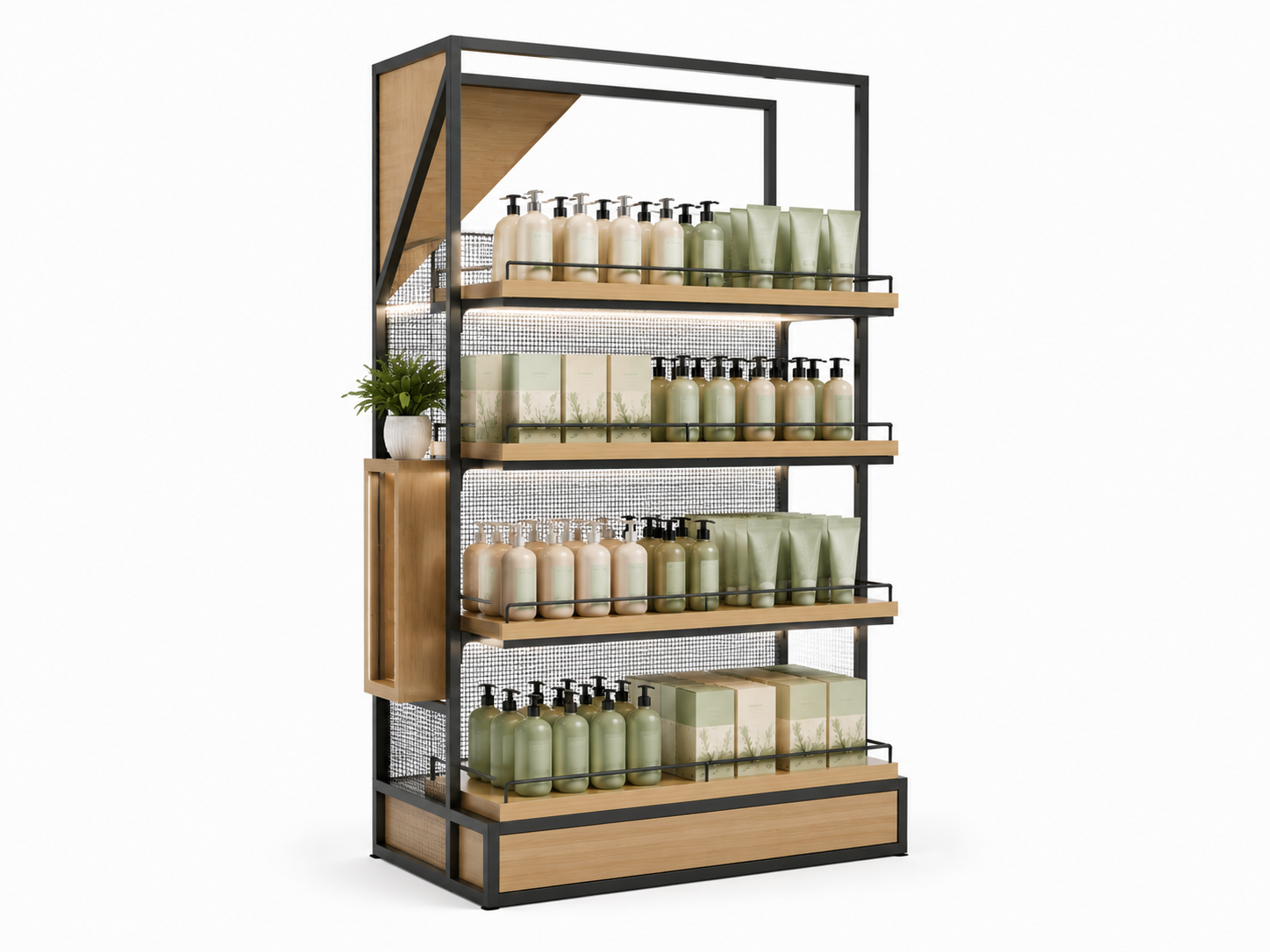
How Material and Structural Design Affect Display Performance
The success of a custom display stand depends on much more than its appearance. Material selection and structural engineering determine how well the display performs throughout its lifecycle—from production and shipping to installation and daily retail use.
Choosing the right material should always be based on practical requirements rather than aesthetics alone.
Different materials offer different advantages:
● Cardboard is lightweight, cost-effective, and ideal for short-term promotions.
● Metal provides excellent durability and high load-bearing capacity.
● Wood delivers a premium appearance for luxury retail environments.
● Acrylic enhances product visibility and is commonly used for cosmetics and electronics.
In many cases, combining multiple materials creates the best balance between appearance, strength, and cost efficiency.
How to Evaluate a Professional Custom Display Stand Manufacturer
Choosing the right manufacturer is just as important as choosing the right display design. An experienced OEM partner does more than produce display stands—they help optimize the entire project from concept to delivery.
When evaluating a manufacturer, buyers should pay attention to several critical factors.
● Does the factory have an in-house design and engineering team?
● Can it provide prototype development before mass production?
● Does it have experience serving international retail brands?
● Are quality control procedures clearly established?
● Can the factory customize different materials and structures?
● Does it have sufficient production capacity to meet delivery schedules?
A manufacturer with strong engineering and project management capabilities can identify potential risks early and provide practical solutions before production begins.
Custom Display Stand Procurement Checklist
Before placing an order, reviewing a simple evaluation checklist can significantly reduce project risks and improve purchasing decisions.
|
Evaluation Item |
Why It Matters |
Recommendation |
|
Product Weight |
Determines material and structure |
Confirm actual product weight before design |
|
Material Selection |
Affects durability and cost |
Choose materials based on retail application |
|
Prototype Approval |
Reduces production risk |
Always approve a physical sample |
|
Packaging Design |
Prevents shipping damage |
Use protective and knock-down packaging when appropriate |
|
Quality Control |
Ensures production consistency |
Confirm inspection standards before production |
|
OEM Experience |
Improves project execution |
Select manufacturers with export experience |
This checklist helps buyers evaluate suppliers beyond price and focus on long-term project success.
What Successful Retail Brands Do Differently
Experienced retail brands rarely select suppliers based solely on quotations. Instead, they focus on total project value.
Successful brands typically:
● Define clear project objectives before requesting quotations.
● Share complete product specifications and branding guidelines.
● Approve prototypes before mass production.
● Allow sufficient production time for quality manufacturing.
● Maintain regular communication throughout the project.
● Build long-term partnerships with reliable OEM manufacturers.
These practices reduce unexpected costs while improving product quality and retail performance.
Conclusion
Ordering custom display stands involves much more than comparing prices or selecting attractive designs. Every decision—from material selection and structural engineering to prototype approval and manufacturer evaluation—directly affects the success of the final retail display.
Many of the most expensive project failures occur before production even begins. By understanding the common mistakes discussed in this guide and working closely with an experienced OEM display manufacturer, brands can reduce procurement risks, improve display quality, control project costs, and create merchandising solutions that truly enhance retail performance.
A successful custom display stand is not simply a display fixture—it is an investment in brand visibility, customer engagement, and long-term sales growth.

FAQ
What is the biggest mistake when ordering custom display stands?
The most common mistake is choosing a supplier based only on price without evaluating engineering capability, quality control, and manufacturing experience.
Why is prototype approval important?
A prototype verifies dimensions, structure, graphics, and functionality before mass production, helping avoid expensive modifications later.
Which material is best for a custom display stand?
There is no universal answer. Cardboard, metal, wood, and acrylic each have different advantages depending on product weight, retail environment, and campaign duration.
How can I reduce the risk of shipping damage?
Use protective packaging, optimize structural design, and choose knock-down configurations when suitable for international transportation.
How do I choose a reliable OEM display stand manufacturer?
Look for a manufacturer with strong engineering capabilities, prototype development services, strict quality control, export experience, and the ability to customize materials and structures.
Can custom display stands be fully customized?
Yes. Professional manufacturers can customize dimensions, materials, colors, branding, graphics, structural design, and packaging according to your retail requirements.
Post time: Jul-08-2026